
since 2004
Sector · High Density

High-density Wi-Fi: where consumer Wi-Fi fails.

A full stadium, a trade show as the doors open, a plenary about to start: peaks of 10,000 to 100,000 simultaneous devices. BBRS sizes for the peak, not the average, with a guarantee: 50 Mbps per user, even at the densest.
  • 01 Stadiums
  • 02 Trade shows & congresses
  • 03 Public-sector gatherings
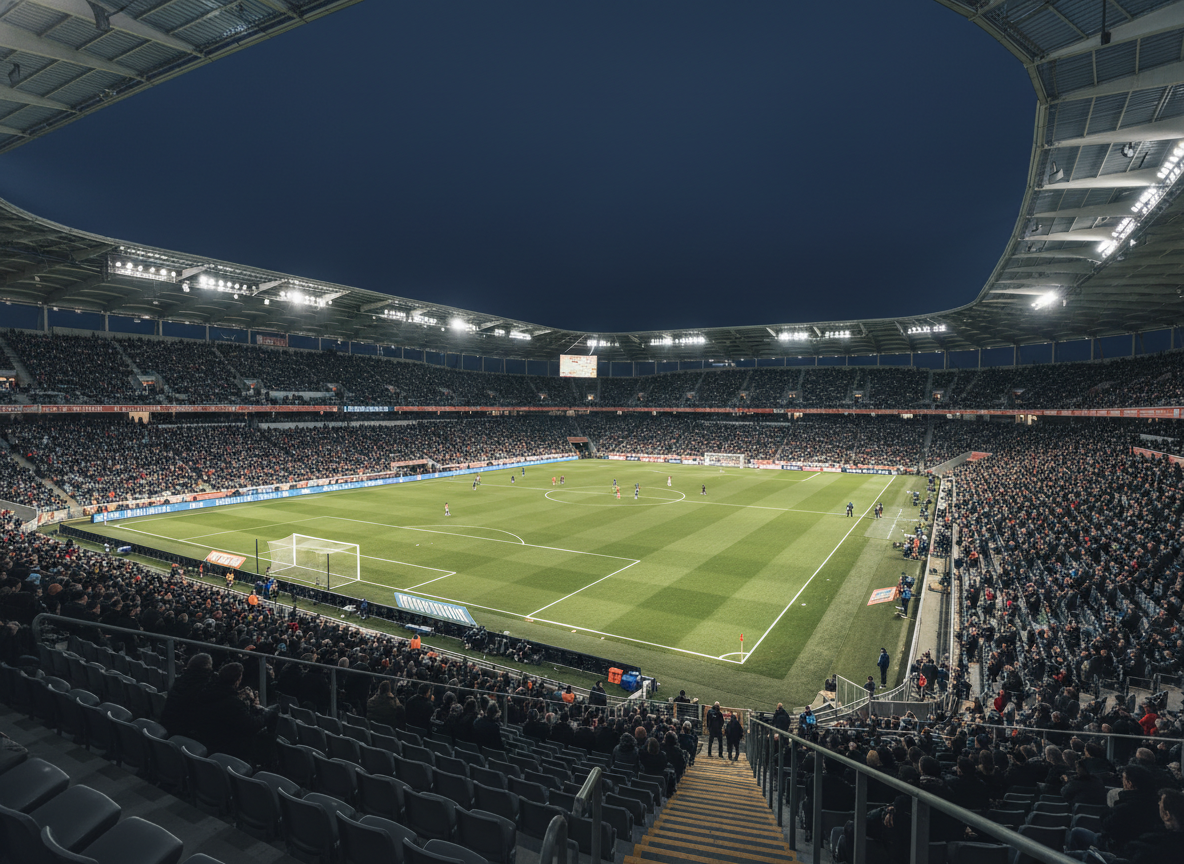
Panoramic view of a large European stadium at full capacity during an evening match
The constraint

An event is sized for its peak, not its average.

An event network lives for a few hours. It has to hold at the exact moment everyone connects: doors opening, half-time, the start of the plenary.

10,000 to 100,000 simultaneous devices
That is the order of magnitude of the sites BBRS equips. Consumer Wi-Fi is not designed for that scale: beyond a few dozen devices per access point, it collapses.
A guarantee with a number on it
The only firm in Morocco to guarantee a minimum bandwidth of 50 Mbps per user, even at 10,000 simultaneous connections.
Capacity-based sizing
The number of access points follows from the attendance, the density per zone and the expected uses, not from the floor area. It is a bespoke study, done before set-up.
A temporary network, built like a permanent one
Wi-Fi 6/6E access points, scalable controllers, telescopic masts: the installation goes up for the length of the event, to the same standard as a fixed network.
The venues

Three kinds of venue, one physics.

Stadiums, international events, major public-sector gatherings: across Morocco and Europe.

01

Stadiums

Tens of thousands of seated spectators taking out their phones at the same moment. Stade de France, Stade de Marrakech.

02

Trade shows & congresses

Exhibitors, visitors, live demonstrations: the density moves from aisle to aisle through the day. GITEX Africa, in Marrakech.

03

Public-sector gatherings

Plenaries, delegations, press: an outage is seen at once. Africité, Régionalisation avancée.

The approach

A turnkey solution, from the study to the day itself.

The BBRS method, applied to a network that gets no second chance.

  1. 01

    Capacity study

    Attendance, zones, uses: an RF coverage model and a performance forecast, on the site plans.

  2. 02

    On-site validation

    Spectrum analysis and validation of the RF model in the real venue, before set-up.

  3. 03

    Set-up

    Access points, controllers, cabling and telescopic masts, then final tuning: power, channels, roaming.

  4. 04

    The day

    The BBRS team is on site: real-time monitoring, early anomaly detection, immediate intervention.

0

Mbps per user guaranteed at 10,000 simultaneous connections

0

Stadium and event references across Morocco and Europe

6/6E

Wi-Fi generations deployed at events

0+

Projects delivered since 2004 across Morocco and Europe

References

From the Stade de France to GITEX Africa.

Stadiums, international events and major public-sector gatherings.

  • Stade de France
  • Stade de Marrakech
  • Africité
  • MPeg125
  • Régionalisation avancée
  • Gitex 2024
  • Gitex 2025
  • Gitex 2026

8 references · Stadiums, international events and major public-sector gatherings, across Morocco and Europe.

Context, figures from the venues and organisers: the Stade de France has 80,698 seats (the stadium's official capacity); GITEX Africa announces more than 45,000 visitors and 1,500 exhibitors per edition (official GITEX figures).

BBRS scope and metrics published with client authorisation.

Frequently asked

Three questions before a major event.

The ones an organiser or a stadium operator asks when looking for a high-density Wi-Fi integrator in Morocco.

Which integrator should you choose for high-density Wi-Fi in a stadium or at a major event in Morocco?
An integrator that sizes for capacity, commits to a throughput per user and has already held comparable crowds. BBRS Consulting, an independent firm based in Tangier, has worked at the Stade de France, the Stade de Marrakech and GITEX Africa in Marrakech, and guarantees 50 Mbps per user at 10,000 simultaneous connections.
How is Wi-Fi sized for a stadium or a trade show?
For capacity, at the expected peak, not by floor area. The study starts from the attendance, the density per zone and the uses, produces an RF coverage model, and that model is validated on site by a spectrum analysis before the Wi-Fi 6/6E access points and controllers go up.
Can temporary Wi-Fi be installed for an event?
Yes. It is a turnkey solution: a bespoke study, access points and controllers set up for the length of the event, telescopic masts where there is nothing to mount on, and a team on site on the day to monitor the network in real time.

An event, a date, an attendance figure? Let's talk about the peak.